
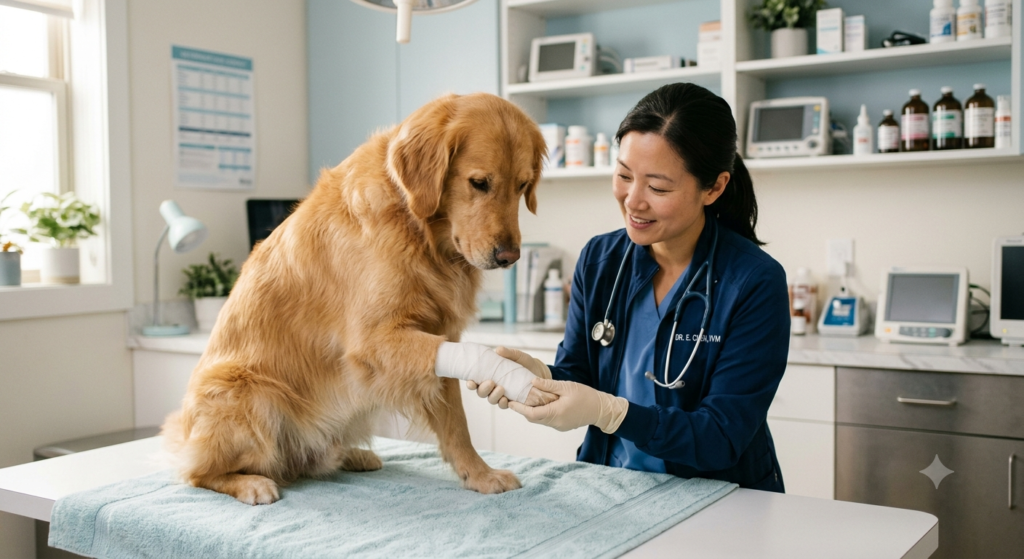

Pet wound care is one of those skills every pet owner hopes they never need, right up until the moment their dog limps in from the backyard with a torn paw pad or their cat comes home from a night out with a fresh scratch across the ear. What you do in the first few minutes after discovering an injury can genuinely change the outcome, and knowing the difference between “clean it and watch it” and “get to the vet now” is knowledge every pet parent in O’Connor Veterinary Clinic‘s East York community should have on hand.
This guide walks through practical pet wound care steps you can take at home, the warning signs that mean a wound needs professional attention, and what recovery actually looks like once a veterinarian has treated the injury. It is written for real situations: a puppy who got too curious with a fence, a senior cat who picked a fight she couldn’t win, or a dog whose paw met a piece of broken glass on a walk near the Taylor Massey Creek trails.
Understanding Pet Wound Care: Why the First Few Minutes Matter
Not every scrape needs a trip to the clinic, but every wound deserves a clear-headed assessment before you decide how to handle it. Wounds in dogs and cats generally fall into a few categories, and the category matters because it determines how the injury should be treated.
Common Types of Wounds in Pets
- Abrasions are surface-level scrapes where the top layer of skin has been rubbed away, often from falls, rough play, or dragging along pavement.
- Lacerations are cuts caused by sharp objects like glass, metal edges, or another animal’s teeth or claws. These can range from shallow to dangerously deep.
- Puncture wounds are small entry points that look minor on the outside but can drive bacteria and debris deep into the tissue. Bite wounds almost always fall into this category.
- Avulsions involve skin or tissue that has been partially or fully torn away, exposing muscle or bone underneath.
According to the American Veterinary Medical Association, first aid is never a replacement for veterinary care. It is a bridge that keeps your pet stable until a professional can take over.
Why Puncture Wounds Deserve Extra Caution
A puncture wound often looks like the least of your worries because the visible opening is small. In reality, these are some of the trickiest injuries in pet wound care. Bacteria get pushed deep beneath the skin, and without proper cleaning and sometimes antibiotics, an abscess can form days later. If your pet was bitten by another animal, assume there is more damage under the surface than you can see, even if the skin barely looks broken.
What to Do Immediately After an Injury
The first ten minutes set the tone for everything that follows. Staying calm helps your pet stay calmer too, which makes handling the wound safer for both of you.
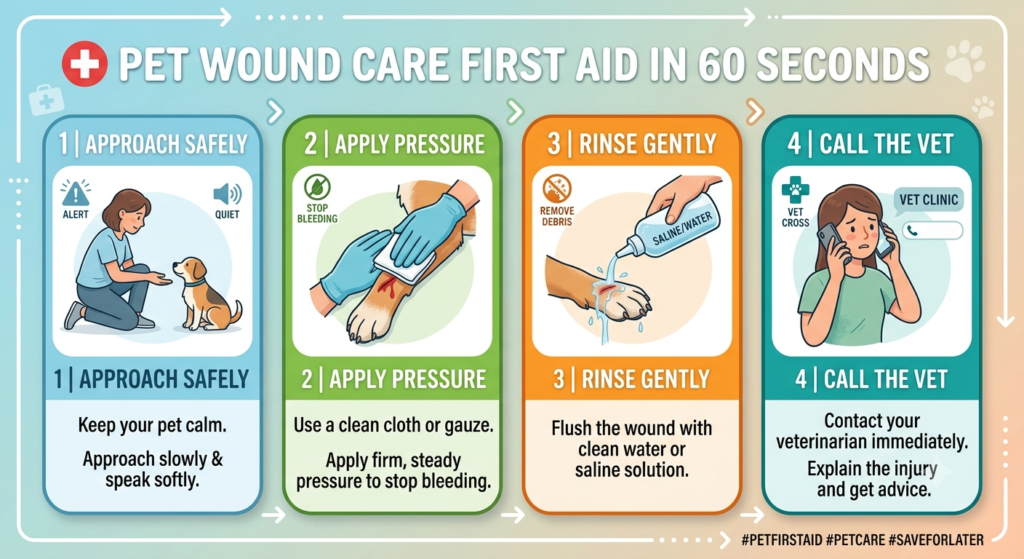
Step 1: Approach Safely
An injured animal, even the gentlest family pet, can bite or scratch out of pain and fear. Speak in a low, steady voice and approach slowly. If your dog seems distressed, a soft muzzle made from a strip of cloth or a leash can prevent an accidental bite while you assess the damage. Never muzzle a pet that is vomiting, choking, or struggling to breathe.
Step 2: Control Bleeding
For active bleeding, apply firm, direct pressure with a clean towel or gauze pad. Hold it steady for a minimum of three minutes without lifting it to check, since interrupting a forming clot restarts the bleeding. If blood soaks through, add more layers on top rather than removing the original cloth. The Merck Veterinary Manual notes that a pressure wrap is safer than a tourniquet for controlling arterial bleeding, since improvised tourniquets can cause additional nerve and tissue damage.
Step 3: Assess Whether It’s a Home-Care Situation
Once bleeding is controlled, take a breath and look at what you are dealing with. Minor surface abrasions on an otherwise bright, alert pet can often be cleaned at home. Anything deeper, anything from a bite, or anything paired with limping, lethargy, or visible pain calls for a same-day veterinary visit.
Step 4: Clean Minor Wounds Correctly
For small, shallow wounds, gently rinse the area with warm water or a saline solution to flush out dirt and debris. Avoid hydrogen peroxide and rubbing alcohol on open wounds. Both feel like logical choices from the human first aid cabinet, but they damage healthy tissue and can actually slow healing in animals, according to VCA Animal Hospitals. If you are unsure whether a household cleaning product or ointment is safe near an open wound, the ASPCA Animal Poison Control Center is a useful resource for checking before you apply anything.
Minor Wound or Emergency? A Quick Comparison
| Situation | Home Care Usually Appropriate | Needs Veterinary Attention |
|---|---|---|
| Small surface scrape, pet acting normal | Yes | Monitor for 24 hours |
| Bleeding stops within 5 minutes of pressure | Yes | If it restarts, seek care |
| Bite wound of any size | No | Always, due to hidden bacterial contamination |
| Wound near eyes, joints, or abdomen | No | Always |
| Pet is limping, hiding, or refusing food | No | Same-day evaluation |
| Wound edges gaping open or deep | No | Likely needs surgical closure |
| Swelling, odor, or discharge days later | No | Signs of infection or abscess |
Toronto Pet Wound Care: Local Realities for East York Pets
Toronto pet wound care has its own set of everyday triggers. Off-leash areas around Stan Wadlow Park and Dentonia Park bring dogs into contact with other animals, uneven terrain, and the occasional piece of debris left behind after storms. Cats who spend any time outdoors in East York neighborhoods are exposed to territorial disputes with other cats, run-ins with raccoons, and the busy roads that cut through the area. Urban wildlife encounters are more common here than many pet owners expect, and a scratch from a raccoon or opossum should always be treated as a potential bite wound given the risk of deeper tissue involvement and disease transmission.
Seasonal changes matter too. Icy sidewalks in winter lead to paw pad lacerations from salt crystals and sharp ice edges, while summer brings more outdoor exploration and, with it, more encounters with broken glass, thorny plants, and other sharp debris in parks and yards.
After the Vet Visit: Aftercare That Actually Works
Getting the wound treated is only half the job. What happens over the following one to two weeks determines whether healing goes smoothly or turns into a second vet visit.
Bandage and Dressing Care
If your pet comes home with a bandage, keep it clean and dry. A plastic bag secured loosely over the paw during bathroom breaks in wet weather can prevent the dressing from getting soaked, which is one of the fastest ways for a healing wound to become reinfected. Check daily for slipping, swelling above or below the bandage line, or a smell that wasn’t there before.
The Cone Isn’t Optional
Pets cannot resist licking or chewing at a healing wound, and it is one of the most common reasons a clean surgical site becomes infected. An E-collar or a soft recovery suit, depending on what your veterinarian recommends, protects the area while it closes. A few uncomfortable days with a cone is a far better outcome than a reopened wound and a second round of treatment.
Medication Compliance
If antibiotics or pain medication were prescribed, finish the full course even if your pet looks completely back to normal after a few days. Stopping early is one of the most common reasons infections resurface, sometimes worse than the original injury.
Watching for Warning Signs
Contact your veterinary team if you notice increasing redness, swelling that spreads rather than shrinks, a foul odor, yellow or green discharge, or a pet who seems to be in more pain on day four than day one. These are signals that the wound isn’t healing the way it should, and early intervention keeps a small setback from becoming a bigger one.
When a Wound Needs More Than a Bandage
Some injuries go beyond what cleaning and a dressing can fix. Deep lacerations with gaping edges, wounds affecting the paw pads or joints, and any injury with significant tissue loss typically require surgical closure to heal properly and minimize scarring. Foreign objects embedded in tissue, abscesses that need to be lanced and drained, and wounds that are more than a few hours old with visible contamination often cannot simply be stitched closed without proper debridement first.
If your pet’s injury falls into this category, look for a clinic offering animal surgery near me that combines soft-tissue surgical capability with on-site diagnostics, so imaging, treatment planning, and the procedure itself can happen without unnecessary delays between referrals.
For active, uncontrolled bleeding or any injury paired with signs of shock such as pale gums, rapid breathing, or collapse, do not wait for a scheduled appointment. Search for emergency vet near me options immediately, since these situations can escalate quickly and stabilization within the first hour often determines the outcome.
Frequently Asked Questions
-
How do I know if my pet’s wound needs stitches?
Wounds needing stitches are usually deep, gaping open, longer than half an inch, or actively bleeding despite pressure. If you can see fat, muscle, or bone, or if the edges don’t naturally sit together, professional closure is needed. Bite wounds almost always require veterinary evaluation regardless of size, since surface appearance rarely reflects the extent of damage underneath the skin.
-
Can I use human antiseptic on my dog’s wound?
Avoid hydrogen peroxide, rubbing alcohol, and most human antiseptic creams on open wounds. These products can damage healthy tissue and delay healing in animals. Warm water or a saline rinse is the safest cleaning method at home. If a veterinarian has prescribed a specific cleanser like diluted chlorhexidine, follow those instructions exactly rather than substituting a human product.
-
How long does it take for a dog’s wound to heal?
Minor surface wounds typically heal within one to two weeks with proper cleaning and protection. Deeper wounds, surgical incisions, or those involving stitches often take two to four weeks for full closure and tissue strength to return. Healing time depends on wound depth, location, your pet’s age, and how well aftercare instructions like bandage changes and activity restriction are followed at home.
-
What are signs of infection in a healing wound?
Watch for spreading redness, swelling that worsens instead of improves, warmth around the site, a foul smell, or thick yellow or green discharge. A pet that seems more painful, lethargic, or feverish several days after an injury is also a red flag. Any of these signs warrant a prompt recheck rather than waiting to see if things improve on their own.
-
Is it normal for a wound to bleed a little after cleaning?
A small amount of light bleeding or oozing after gentle cleaning is generally normal, especially if the wound is still forming a new clot. Persistent, heavy, or bright red bleeding that doesn’t slow with pressure is not normal and needs immediate attention. When in doubt about whether bleeding is within a normal range, a quick call to your veterinary team can offer reassurance or prompt faster action.
Final Thoughts
Good pet wound care comes down to three things: staying calm enough to assess the situation clearly, knowing which injuries are safe to manage at home, and never underestimating a wound just because it looks small on the surface. Puncture wounds, bite injuries, and anything paired with limping or behavior changes deserve a veterinarian’s eyes, even when the visible damage seems minor.
Keeping a basic first aid kit at home, knowing the route to your nearest clinic, and following aftercare instructions to the letter after any treated wound will put your pet in the best possible position to heal quickly and fully. For anything beyond a superficial scrape, connecting with your veterinary team early is always the safer path, and it’s a habit worth building long before the next unexpected injury happens.
A wound that looks minor today can become a much bigger problem by tomorrow, so when in doubt, get it checked.