


Finding an urgent care vet Toronto pet owners can trust becomes a much more urgent question the moment your dog starts limping after a walk or your cat won’t stop scratching at a swollen paw. In that moment, most people freeze on one decision before anything else: does this need urgent care, or does it need the emergency vet, right now? The two paths look similar from the outside, but they exist for very different reasons, and knowing which one fits your situation can save you time, stress, and in some cases, your pet’s life.
This guide breaks down the real difference between urgent pet care and emergency veterinary care, walks through the symptoms that belong in each category, and gives you a practical way to decide in the moment. For East York and East Toronto pet owners searching for a vet open now, this is the kind of information worth bookmarking before you need it.
Urgent Care Vet Toronto: What Urgent and Emergency Care Actually Mean
The terms get used interchangeably online, but in practice, urgent care and emergency care describe two different levels of medical priority.
What Urgent Pet Care Covers
Urgent pet care handles conditions that are uncomfortable, worsening, or concerning, but not immediately life-threatening. Think of a dog with a mild limp that started this morning, a cat with a small cut that has stopped bleeding, or a pet with vomiting that has lasted a day without other red-flag symptoms. These situations genuinely cannot wait for a routine appointment scheduled next week, but they also don’t require the same intensity of intervention as a true emergency.
What Emergency Vet Care Covers
Emergency vet care exists for situations where every minute matters. Difficulty breathing, uncontrolled bleeding, collapse, seizures, suspected poisoning, and bloated or distended abdomens all fall into this category. These are conditions where delaying care by even an hour can change the outcome, and they require immediate assessment and stabilization rather than a same-day appointment slot.
The Core Difference: Why Timing Changes Everything
According to veterinary emergency specialists at Texas A&M’s School of Veterinary Medicine, pet emergencies generally split into two groups: those that are immediately life-threatening, such as being struck by a vehicle, and those that become life-threatening only after time has passed, such as a toxin that doesn’t show symptoms for a day or two. Urgent care sits in the space between these emergencies and routine wellness visits, covering issues that need prompt attention without needing the intensive stabilization protocols of a true emergency.
This distinction matters because it shapes how a clinic prioritizes patients the moment they walk through the door. A limping dog and a dog struggling to breathe both need help, but they don’t need help on the same timeline.
Urgent Care vs Emergency Vet: A Quick Comparison
| Symptom or Situation | Urgent Care | Emergency Vet |
|---|---|---|
| Mild limp, no swelling, pet is walking | Yes | Not usually |
| Vomiting or diarrhea lasting under 24 hours | Yes | If severe or bloody |
| Small cut, bleeding has stopped | Yes | If deep or from a bite |
| Skin infection, rash, or hot spot | Yes | Rarely |
| Difficulty breathing or blue-tinged gums | No | Always |
| Suspected poisoning or toxin ingestion | No | Always |
| Bloated, hard, or distended abdomen | No | Always |
| Seizures or collapse | No | Always |
| Unable to urinate, especially male cats | No | Always |
| Severe, uncontrolled bleeding | No | Always |
Signs Your Pet Needs Emergency Care Right Now
Certain symptoms should send you straight to an emergency vet without a phone call first, though calling ahead while someone else drives is always a smart move if you have help available.
- Labored breathing, gasping, or gums that look pale, blue, or gray
- Collapse, sudden inability to stand, or loss of consciousness
- Seizures lasting more than a minute or occurring in clusters
- A hard, swollen, or visibly distended abdomen, especially in deep-chested dogs
- Known or suspected ingestion of a toxic substance, medication, or poisonous plant
- Trauma from a fall, vehicle, or fight with another animal
- Straining to urinate with little or no output, particularly in male cats
The American Veterinary Medical Association maintains detailed emergency care resources for pet owners, and if you suspect your pet has ingested something toxic, the ASPCA Animal Poison Control Center is a valuable resource to consult alongside your veterinary team.
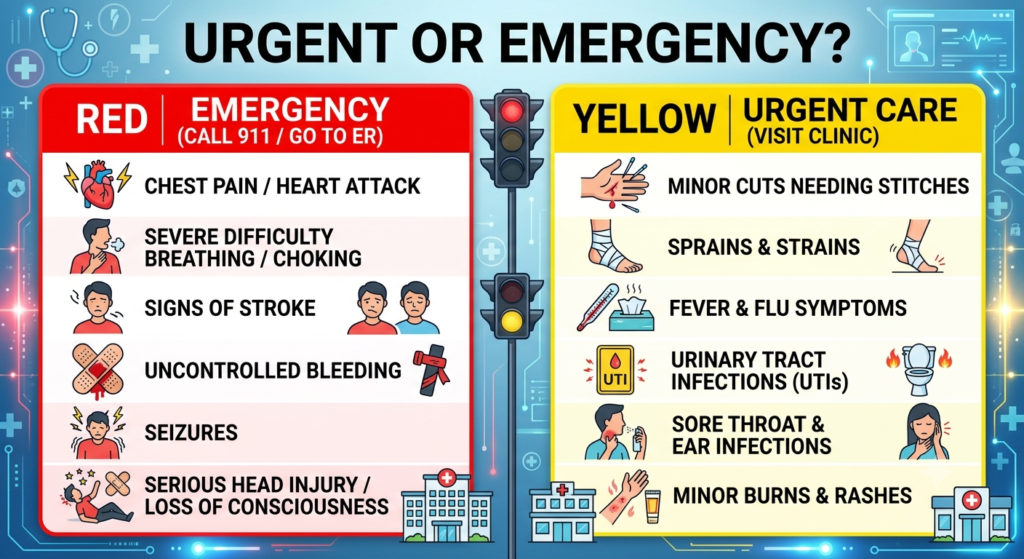
When Urgent Care Is the Right Fit
Urgent pet care makes sense when your pet is uncomfortable or something seems off, but there’s no sign of a life-threatening emergency. A few examples of situations that typically belong here:
- A limp that appeared suddenly but your pet is still bearing some weight
- Ear scratching, head shaking, or a visible ear infection
- A minor wound that has stopped bleeding and doesn’t appear deep
- Eye redness or discharge without swelling shut or visible injury
- Mild lethargy or reduced appetite lasting less than a day
- A skin irritation, hot spot, or localized swelling
If you’re dealing with a cut or scrape that falls into this category, our guide on pet wound care walks through exactly how to assess a wound and decide whether home care is appropriate or a visit is needed.
A Local Scenario: Choosing Urgent Care Over the ER
A common situation plays out often among East York pet owners: a dog returns from an evening walk near the Taylor Massey Creek trails limping slightly on one front leg. There’s no visible wound, no swelling, and the dog is still willing to put a little weight on it. The owner isn’t sure if this warrants an emergency visit or can wait until morning.
In cases like this, urgent care is usually the appropriate path. A same-day exam can rule out a fracture with imaging, check for a soft tissue strain, and get pain management started, all without the wait times or intensity of a true emergency department. If the limp had come with visible bone, an inability to bear any weight at all, or obvious distress, that would shift the situation into emergency territory instead. Learning to read these differences is exactly what keeps pet owners from either overreacting to a minor injury or, worse, underestimating a serious one.
What Happens During an Urgent Care Visit
An urgent pet care visit typically starts with a focused history and physical exam aimed at identifying what’s changed and how quickly it’s progressing. From there, diagnostics like digital X-rays, bloodwork, or a closer physical assessment help confirm what’s going on. Treatment plans are built around getting your pet comfortable and addressing the underlying issue, whether that’s pain management for a strain, antibiotics for an infection, or wound cleaning and a bandage for a minor injury.
For East Toronto pet owners searching for an urgent care vet near me toronto, the ideal clinic combines this kind of prompt, focused urgent care with the ability to escalate to full emergency treatment on-site if an exam reveals the situation is more serious than it first appeared. That flexibility matters, because symptoms don’t always match their initial presentation.
How Triage Works Behind the Scenes
When you arrive at a clinic with an urgent or emergency concern, staff perform what’s known as triage, a rapid assessment used to prioritize patients based on how unstable they are, not simply the order they arrived in. The Merck Veterinary Manual describes this as a primary survey focused on airway, breathing, and circulation, followed by a more thorough secondary examination once the patient is stable. This is why a pet who arrives struggling to breathe will be seen before a pet with a limp, even if the limping pet arrived first. It isn’t a reflection of how much either pet’s owner cares, it’s simply how veterinary teams keep the most vulnerable patients safe.
Quick Decision Checklist
When you’re standing in your kitchen trying to decide what to do next, run through these questions:
- Is your pet struggling to breathe, unconscious, or unable to stand? If yes, this is an emergency.
- Is there heavy, uncontrolled bleeding? If yes, this is an emergency.
- Has your pet ingested something potentially toxic? If yes, this is an emergency.
- Is your pet uncomfortable, limping, or showing mild symptoms but otherwise alert and responsive? Urgent care is likely appropriate.
- Still unsure? Call your veterinary team and describe what you’re seeing. A quick phone conversation can point you in the right direction faster than searching symptoms online.
Frequently Asked Questions
-
What is the difference between urgent care and an emergency vet?
Urgent care addresses conditions that need prompt attention but aren’t immediately life-threatening, such as a mild limp or a minor wound. Emergency vet care handles situations where delay could be dangerous, like difficulty breathing, seizures, or severe trauma. The core difference is timing: emergencies need action within minutes, while urgent concerns can typically wait a few hours for a same-day visit.
-
Can urgent care vets perform X-rays and bloodwork?
Yes, many urgent care visits include on-site diagnostics like digital X-rays and bloodwork to help identify the cause of symptoms quickly. This allows the veterinary team to confirm whether an issue like a limp is a soft tissue strain or something more significant, and to start appropriate treatment during the same visit rather than waiting for referral results.
-
Should I call before bringing my pet in for urgent care?
Calling ahead is a good idea whenever possible, since it lets the clinic prepare for your arrival and gives the veterinary team a chance to advise you on what to watch for during the drive. That said, if your pet’s condition is worsening quickly or you’re unsure whether it qualifies as an emergency, don’t delay care to make the call first.
-
What if I’m not sure whether my pet’s situation is urgent or an emergency?
When in doubt, treat it as urgent and seek care rather than waiting to see if symptoms improve. Veterinary teams would rather examine a pet that turns out to be stable than have an owner wait too long on something that worsens. A quick phone call describing the symptoms can also help clarify which level of care is appropriate before you leave home.
-
Does urgent pet care cost less than emergency vet care?
Urgent care visits are generally less resource-intensive than true emergencies, since they don’t require the same level of immediate stabilization, monitoring equipment, or staff involvement. Every situation is different depending on the diagnostics and treatment needed, so the clinic team can walk you through what your pet’s specific visit involves once an exam has taken place.
Final Thoughts
Choosing between urgent pet care and an emergency vet doesn’t have to be a guessing game. Life-threatening signs like breathing trouble, collapse, seizures, and uncontrolled bleeding always mean the emergency route. Everything less severe, from a mild limp to a small healed-over cut, usually fits comfortably into urgent care instead. Keeping this distinction in mind, along with the number of a trusted urgent care vet Toronto clinic saved in your phone, means you’ll never be caught making that decision from scratch when it matters most.
The goal isn’t to predict every scenario perfectly, it’s to know enough to act quickly and confidently when your pet needs you to.