
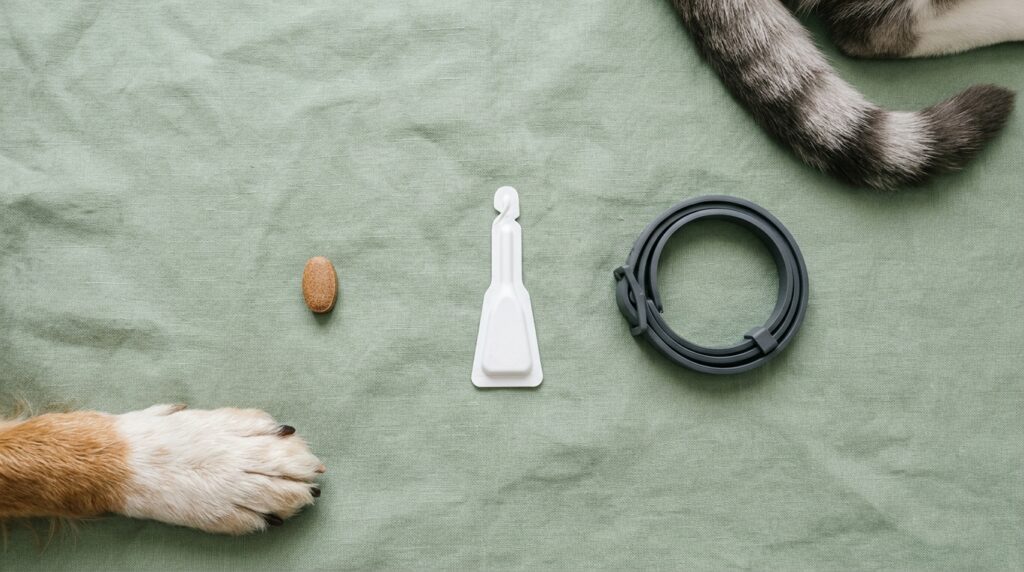

How does flea and tick medicine work once it is swallowed, applied to the skin, or buckled around your pet’s neck? The short answer is that each format reaches the parasite by a different route, and that route decides how fast it kills, whether a tick has to bite first, and which pets it is safe for. Most owners pick a product by habit or by what a friend uses, without knowing what is actually happening inside or on their pet. This guide breaks down the science in plain language so you can have a better conversation with your veterinarian. If you would rather talk it through in person, our team is one of the closest vets near me for East York and East Danforth families.
How Does Flea and Tick Medicine Work? The Basic Mechanism
Almost every modern flea and tick product works on the parasite’s nervous system. Fleas and ticks rely on chemical signals to control their muscles, just as dogs and cats do, but the receptors involved are built differently. Veterinary parasiticides are designed to lock onto the insect or tick version of those receptors far more strongly than onto the mammal version.
When the drug binds, the parasite’s nerves either fire uncontrollably or shut down. The result is paralysis and death, usually within hours. The pet is spared because the dose is far too small to affect its own nervous system in the same way.
What changes between products is the delivery route:
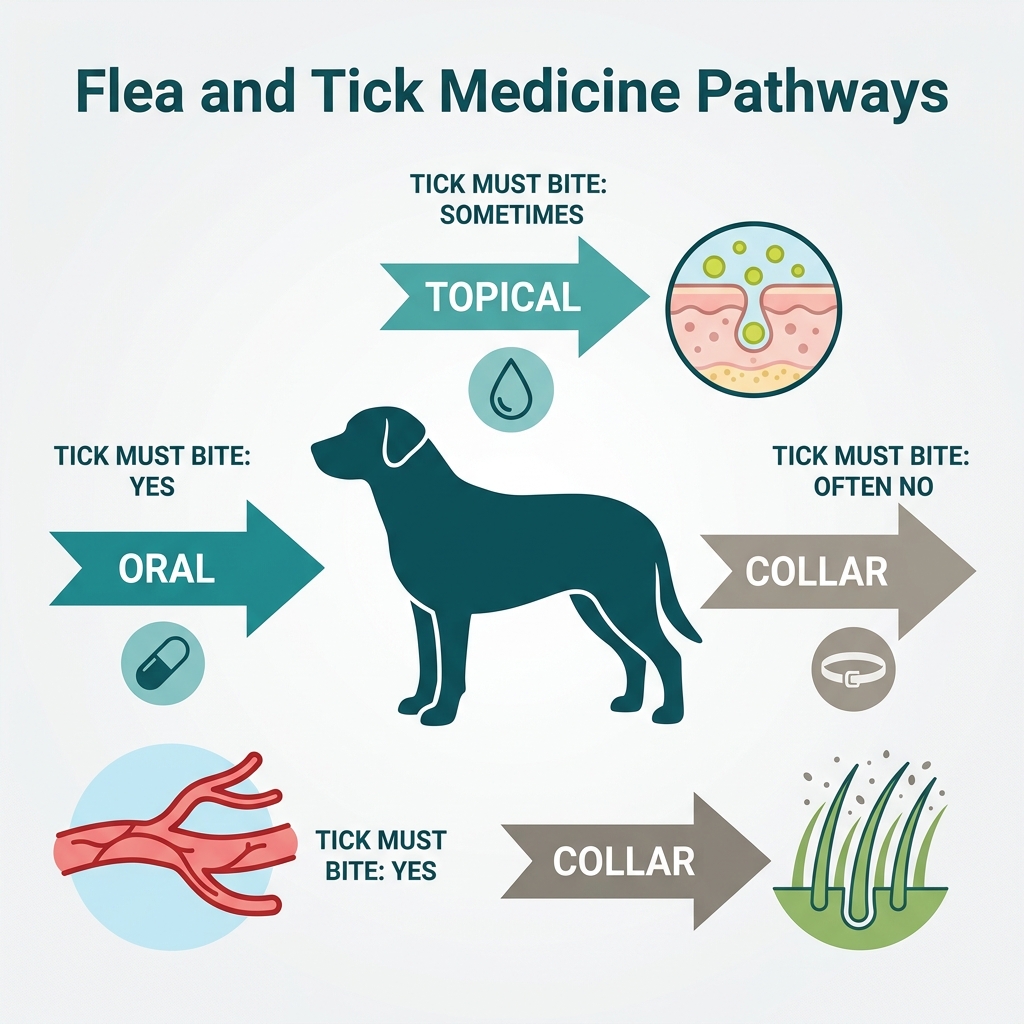
- Systemic (oral chews and some topicals): the drug travels in the bloodstream. The parasite is exposed when it bites and feeds.
- Contact (most spot-ons and collars): the drug spreads through the natural oils on the skin and coat. The parasite is exposed when it touches or crawls through the fur.
- Repellent (certain collars and spot-ons): the drug irritates the tick’s legs and sensory organs, so it drops off or never attaches.
That single difference explains most of the pros and cons below.
The Main Drug Families and What They Do
You do not need to memorize active ingredients, but recognizing a few names on the box helps you understand what you are giving your pet.
| Drug family | Common active ingredients | How it kills | Usual format | Covers |
|---|---|---|---|---|
| Isoxazolines | Fluralaner, afoxolaner, sarolaner, lotilaner | Blocks chloride channels in parasite nerves, causing paralysis | Oral chew (dogs and cats), some cat topicals | Fleas and ticks |
| Phenylpyrazoles | Fipronil | Blocks the same nerve channels on contact | Spot-on, spray | Fleas and ticks |
| Neonicotinoids | Imidacloprid, nitenpyram | Overstimulates nerve receptors | Spot-on, collar, fast-acting tablet | Fleas mainly |
| Pyrethroids | Permethrin, flumethrin, deltamethrin | Disrupts nerve signalling and repels | Spot-on, collar | Ticks and fleas (permethrin is toxic to cats) |
| Macrocyclic lactones | Selamectin, moxidectin, milbemycin | Paralyzes parasites through different nerve channels | Topical or chew, often combined | Heartworm, some fleas, mites, intestinal worms |
| Insect growth regulators | Methoprene, pyriproxyfen, lufenuron | Stops flea eggs and larvae from developing | Added to spot-ons or chews | Flea life cycle only |
Many prescription products combine two or more of these, which is why one monthly chew can cover fleas, ticks, heartworm and intestinal worms at the same time. Combination products are a big part of Toronto pet heartworm prevention, since one dose handles several parasites.
How Oral Flea and Tick Medicine Works
Oral chews are absorbed through the gut and carried in the bloodstream for one to three months, depending on the product. Nothing stays on the coat. A flea or tick has to start feeding to take in the drug, and once it does, it dies quickly.
How fast it works: Most isoxazoline chews start killing fleas within a few hours, before they can lay eggs. Ticks are typically killed within one to two days of attaching.
Why the speed matters for ticks: Lyme disease bacteria usually need a tick to stay attached for more than a day before they pass into the dog. A product that kills the tick early cuts that window short. This is the core answer to how tick medicine works for dogs: it does not stop the bite itself, it stops the tick from staying long enough to transmit most diseases.
Strengths:
- Nothing to wash off, so swimming and bathing do not reduce protection
- No greasy residue for children or other pets to touch
- Even, predictable dosing from the first day
Watch-outs: The isoxazoline class carries a label caution for neurologic side effects such as tremors or seizures in a small number of animals. The U.S. FDA fact sheet on isoxazoline products explains this clearly. Most pets tolerate these drugs well, but dogs and cats with a seizure history need a different plan.
How Topical Flea and Tick Medicine Works
Spot-on products are applied to the skin between the shoulder blades. From there, the drug moves in one of two ways.
Contact topicals (such as fipronil or imidacloprid) spread across the body through the skin’s natural oil layer and collect in the hair follicles and oil glands. They release slowly over the month, so parasites are exposed as they crawl through the coat, often before biting.
Systemic topicals (such as selamectin, or fluralaner and sarolaner products made for cats) soak through the skin into the bloodstream. They then behave much like an oral chew.
Strengths:
- A good option for pets that refuse chews or have sensitive stomachs
- Some contact formulas kill fleas before they bite, which helps pets with flea allergies
- Several cat-safe prescription options exist
Watch-outs:
- Bathing or swimming too soon after application can reduce how well contact products work, so follow the label timing
- The application spot can stay oily for a day or two
- Over-the-counter spot-ons vary widely, and some contain permethrin, which is dangerous for cats
How Flea and Tick Collars Work
Modern prescription-grade collars are not the dusty, smelly collars many owners remember. They are built from a polymer that holds the active ingredients and releases them slowly into the skin’s oil layer, where they spread over the body for up to eight months.
The best-known combination pairs imidacloprid for fleas with flumethrin, a pyrethroid that both kills and repels ticks. That repellent action is the main difference from oral medicine: ticks are often affected on contact and may never bite at all.
Strengths:
- Long-lasting, which suits owners who forget monthly doses
- Repels ticks rather than waiting for a bite
- Available in versions approved for cats
Watch-outs:
- The collar has to fit snugly against the skin to work
- Cheap pyrethroid collars made for dogs can poison cats who sleep beside them
- Some pets develop skin irritation under the collar
Oral vs Topical vs Collar: Side-by-Side Comparison
| Oral chew | Topical spot-on | Collar | |
|---|---|---|---|
| Route | Bloodstream | Skin oils or bloodstream | Skin oils |
| Does the tick need to bite? | Yes | Depends on product | Often no (repels) |
| Typical duration | 1 to 3 months | 1 month (some cat products 2 to 3) | Up to 8 months |
| Affected by bathing | No | Yes, for contact products | Minimally, if label allows |
| Best for | Swimmers, homes with young kids | Pets that refuse chews | Owners who prefer set-and-forget |
| Main caution | Seizure history | Permethrin around cats | Fit and skin irritation |
For a broader look at which format suits which household, our flea and tick control for dogs comparison goes deeper into choosing between products.
Is Cat and Dog Flea Treatment the Same?
No, and this is the single most important safety point in this guide. Cats lack a liver enzyme pathway that dogs use to break down certain chemicals, especially permethrin and other concentrated pyrethroids. A dog spot-on applied to a cat, or even a cat grooming a freshly treated dog, can cause drooling, muscle tremors, twitching and seizures within hours.
If you think your cat has been exposed to a dog product, wash the area with mild dish soap and lukewarm water and contact a Toronto emergency vet right away. Do not wait for symptoms to worsen.
As for how tick prevention works on cats: the mechanisms are the same as in dogs, but only products tested and labelled for cats should ever be used, at doses matched to the cat’s weight.
Why Fleas Keep Coming Back Even After Treatment
Adult fleas on your pet are only a small fraction of the problem, often estimated at around five percent. The rest are eggs, larvae and cocoons hidden in carpets, bedding and furniture. Cocoons can stay dormant for weeks to months and hatch when they sense warmth and movement.
That means even a fast-acting product needs time. New fleas will keep jumping on and dying for several weeks while the home population burns out. This is normal and does not mean the medicine has failed. Two steps make the biggest difference:
- Treat every dog and cat in the home consistently for at least three months
- Vacuum daily and wash pet bedding in hot water during that period
Ticks in Toronto: Why Year-Round Protection Is Now the Norm
Blacklegged ticks, the species that carries Lyme disease, have spread steadily across southern Ontario. Public Health Ontario’s blacklegged tick risk area map shows how far established populations now reach. Ticks stay active any time temperatures rise a few degrees above freezing, which in recent Toronto winters can mean mild spells in December, January and February.
The Companion Animal Parasite Council guidelines recommend year-round parasite control for this reason. Ravines, trails and leash-free parks around East York are classic tick habitats, and our guide on dog tick control in Ontario explains how the changing climate has shifted local risk.
How Your Vet Chooses the Right Product
There is no single best option for every pet. During a preventive visit, your veterinarian weighs:
- Species, age, weight and breed
- Any history of seizures, skin allergies or stomach upset
- Other pets in the home, especially cats living with dogs
- Lifestyle: swimming, hiking, boarding, cottage trips
- Whether heartworm and intestinal worm protection should be combined
Your annual visit for flea and tick prevention for dogs and cats is the best time to review the plan, check for ticks, and adjust doses as your pet grows or ages.
Frequently Asked Questions
-
How does tick medicine work for dogs?
Most tick medicine for dogs is an oral chew that enters the bloodstream and stays there for one to three months. When a tick attaches and starts feeding, it takes in the drug, which paralyzes its nervous system and kills it, usually within one to two days. Because Lyme disease typically needs longer attachment to spread, killing the tick early greatly lowers the risk. Some collars also repel ticks before they bite.
-
How does tick prevention work on cats?
Tick prevention for cats works the same way as in dogs, either through the bloodstream or through the skin’s natural oils, but only cat-labelled products are safe. Options include prescription topicals that absorb into the bloodstream, oral chews made for cats, and certain long-lasting collars approved for felines. Never use a dog product on a cat, since some dog formulas contain permethrin, which cats cannot break down safely.
-
Is topical flea treatment safer than oral for dogs?
Neither is automatically safer. Both are considered safe for most healthy dogs when used at the correct weight-based dose. Oral chews leave no residue on the coat, which helps in homes with young children or cats. Topicals can suit dogs with sensitive stomachs or a history of seizures. The safest choice depends on your dog’s health history, other pets in the home, and lifestyle, so it is worth reviewing with your veterinarian.
-
Why am I still seeing fleas after giving flea medicine?
Seeing fleas after treatment is common and usually does not mean the product failed. Most of the flea population lives in the home as eggs, larvae and cocoons, which keep hatching for weeks. New fleas jump onto your pet and die after contact or biting. Treating every pet in the household for at least three months, along with frequent vacuuming and hot-washing bedding, usually clears the problem completely.
-
Does my indoor cat really need flea and tick prevention?
Indoor cats face less risk, but not zero risk. Fleas can arrive on dogs, clothing, visitors or other pets, and an untreated cat can keep a flea infestation going in a home where the dog is protected. Ticks are less common indoors but can hitch a ride on dogs. Your veterinarian can help decide whether year-round or seasonal protection makes sense for your cat’s specific living situation.
-
Final Thoughts: How Does Flea and Tick Medicine Work for Your Pet?
So, how does flea and tick medicine work in practice? Oral chews work from the bloodstream and need a bite, topicals work through the skin’s oils or are absorbed internally, and collars release slowly and can repel ticks before they attach. Each format is effective when it matches the pet, the household and the season. If you are unsure which option fits your dog or cat, contact our team at 1551 O’Connor Dr, East York, ON M4B 2V7, call +1 416-755-8387, or email petcare@oconnorveterinaryclinic.ca.
The best flea and tick medicine is the one that suits your pet and gets given on time, every time.