

Diabetes in pets is one of the most common hormonal conditions we see in middle-aged and senior dogs and cats, and it is also one of the most manageable once it is caught. The early signs are easy to miss because they look like ordinary habits: a cat that empties the water bowl a little faster, a dog that asks to go out at night, a pet that eats well yet keeps getting thinner. If you have noticed any of these changes and are searching for a vet near me in East York, this guide walks you through what diabetes is, how it is diagnosed, how treatment works, and what daily life looks like for a diabetic pet.
What Is Diabetes in Pets?
Diabetes mellitus happens when the body cannot move glucose (sugar) out of the bloodstream and into the cells that need it for energy. Insulin, made by the pancreas, is the key that opens those cells. With too little insulin, or a body that stops responding to it, glucose builds up in the blood and spills into the urine. Sugar in the urine pulls water with it, so pets urinate and drink more. Starving cells send hunger signals, so appetite climbs while the body burns fat and muscle and weight drops.
How Diabetes Differs in Dogs and Cats
| Feature | Dogs | Cats |
|---|---|---|
| Most common type | Similar to human type 1 (insulin-producing cells are lost) | Similar to human type 2 (insulin resistance, often linked to weight) |
| Typical age at diagnosis | Middle-aged to senior, often 7 to 10 years | Usually older than 7 years |
| Higher-risk groups | Females, certain breeds such as Miniature Schnauzers, Samoyeds, Poodles and Beagles | Overweight cats, males, indoor cats with low activity, Burmese cats |
| Insulin needed long term? | Almost always, for life | Usually at first, but some cats go into remission |
| Common complication | Cataracts, often within the first year | Weakness in the hind legs (a flat-footed, “dropped hock” stance) |
| Effect of weight loss | Helps control, does not reverse the disease | Can improve insulin response dramatically |
In short, a diabetic dog is usually a lifelong insulin patient, while a cat diagnosed early has a real chance of needing less insulin, or none, over time.
Which Pets Are Most at Risk?
A few factors tip the odds:
- Excess weight. The biggest controllable risk, especially for cats, because fat tissue blunts the response to insulin.
- Age. Most cases appear in pets over 7.
- Long-term steroid use. Corticosteroids can push a borderline pet into diabetes.
- Pancreatitis. Repeated inflammation of the pancreas can damage the cells that make insulin.
- Other hormonal conditions. Cushing’s disease in dogs and acromegaly in cats both interfere with insulin.
- Intact female dogs. Hormones released during the heat cycle can trigger insulin resistance.
Early Signs of Diabetes in Dogs and Cats
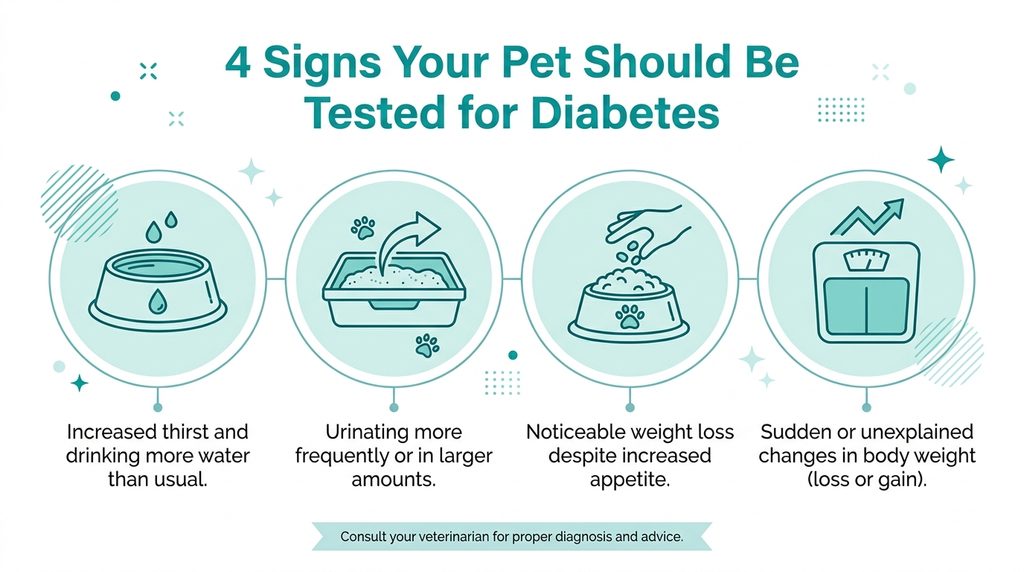
The Four Classic Signs
- Drinking more water. You refill the bowl more often, or your cat drinks from taps and sinks.
- Urinating more. Larger litter box clumps, accidents, or new night-time trips outside.
- Bigger appetite. Your pet seems hungry all the time.
- Weight loss despite eating well. The sign owners most often explain away in senior pets.
Other Changes Worth Noting
- Cloudy eyes in dogs, which can progress to cataracts
- A greasy or unkempt coat in cats who stop grooming
- Repeated urinary tract infections, since sugary urine feeds bacteria
- Cats walking flat on their hocks or struggling to jump
Signs That Need Same-Day Care
When diabetes goes unnoticed for too long, the body breaks down fat so fast that acids called ketones build up in the blood. This condition, diabetic ketoacidosis (DKA), is a medical emergency. Watch for vomiting, refusal to eat, severe lethargy, rapid breathing, dehydration, or a sweet or fruity smell on the breath. A pet showing these signs needs to be seen right away, so contact an emergency vet near me rather than waiting for a routine appointment.
How Vets Diagnose Diabetes
A diagnosis is never made from a single number. Your veterinarian looks for persistently high blood glucose together with glucose in the urine, then checks for anything that might be causing or complicating the problem.
Bloodwork and Urinalysis
Most diagnoses start with a physical exam and a basic panel through our pet diagnostic services. A complete blood count (CBC), chemistry panel and urinalysis show blood glucose, organ values, electrolytes, and any glucose or ketones in the urine. Because these run in our in-house lab, most results come back during the same visit.
Confirming the Diagnosis
Cats are a special case. A stressed cat in a carrier can show a temporary spike in blood sugar that has nothing to do with diabetes. To separate stress from disease, vets often add a fructosamine test, which reflects average glucose over roughly the previous one to three weeks. Specialized panels like this, along with thyroid testing in older cats and pancreatic markers in dogs, are often sent out as Toronto pet blood tests to an accredited reference laboratory.
Looking for Related Conditions
Pancreatitis, urinary infections, Cushing’s disease, hyperthyroidism and dental infections can all make blood sugar harder to control, so your vet may recommend a urine culture or abdominal imaging. Our Toronto pet ultrasound guide explains when imaging is useful and what it can show.
| Test | What It Measures | Why It Matters for Diabetes |
|---|---|---|
| Blood glucose | Sugar level at that moment | Confirms high blood sugar |
| Urinalysis | Glucose, ketones, signs of infection | Confirms sugar in urine, screens for DKA and UTIs |
| Chemistry panel | Organ function, electrolytes | Finds complications and other diseases |
| Fructosamine | Average glucose over 1 to 3 weeks | Separates stress spikes from true diabetes, tracks control |
| Thyroid (T4) | Thyroid hormone level | Hyperthyroidism in cats can mask or complicate diabetes |
| Urine culture | Bacterial growth | Infections are common and disrupt glucose control |
For a deeper clinical overview of these tests, the Merck Veterinary Manual’s section on diabetes in dogs and cats is a reliable reference.
Treatment Options for Diabetic Dogs and Cats
Insulin Therapy
Most diabetic pets need insulin injections, usually twice a day with meals. The needles are very fine, and most owners settle into the routine within a week or two. Your veterinarian will choose an insulin suited to the species, start at a conservative dose, and adjust it over several weeks. Never change the dose at home without veterinary guidance, because too much insulin is more dangerous than too little.
Diet and Weight Management
Food is half of the treatment plan. Diabetic cats often do best on a high-protein, low-carbohydrate diet, while dogs usually benefit from a consistent, higher-fibre diet that slows the post-meal rise in blood sugar. For both: the same food, the same amount, at the same times each day. Our team can recommend a suitable veterinary therapeutic diet and help you set a realistic weight goal if your pet needs to slim down.
Oral Medication for Some Cats
For some newly diagnosed cats, once-daily oral medications called SGLT2 inhibitors can replace injections. They are not suitable for cats already on insulin or showing ketones, so careful screening comes first.
The Possibility of Remission in Cats
Because feline diabetes is often driven by insulin resistance, some cats regain enough natural insulin production to stop injections entirely. The best odds come with early diagnosis, prompt and steady glucose control, a low-carbohydrate diet and weight loss. The Cornell Feline Health Center’s guide to feline diabetes covers remission and long-term outlook in more detail. Remission is not a cure, so these cats still need monitoring.
Long-Term Management at Home
Building a Daily Routine
Diabetic pets thrive on predictability:
- Feed a measured meal, confirm your pet has eaten, then give insulin
- Keep exercise similar from day to day; a sudden long hike can drop blood sugar
- Track water intake, appetite and urination in a simple notebook or phone app
- Repeat the meal and insulin about 12 hours later if your pet is on twice-daily dosing
Monitoring Blood Glucose
Your veterinarian tracks progress with glucose curves (a series of readings over a day), fructosamine tests, and sometimes a small wearable sensor that records glucose continuously for up to two weeks. Many owners also check glucose at home with a pet meter and a tiny ear sample. The AAHA Diabetes Management Guidelines for Dogs and Cats emphasize that how your pet looks and behaves at home matters just as much as any single number.
Recognizing Low Blood Sugar
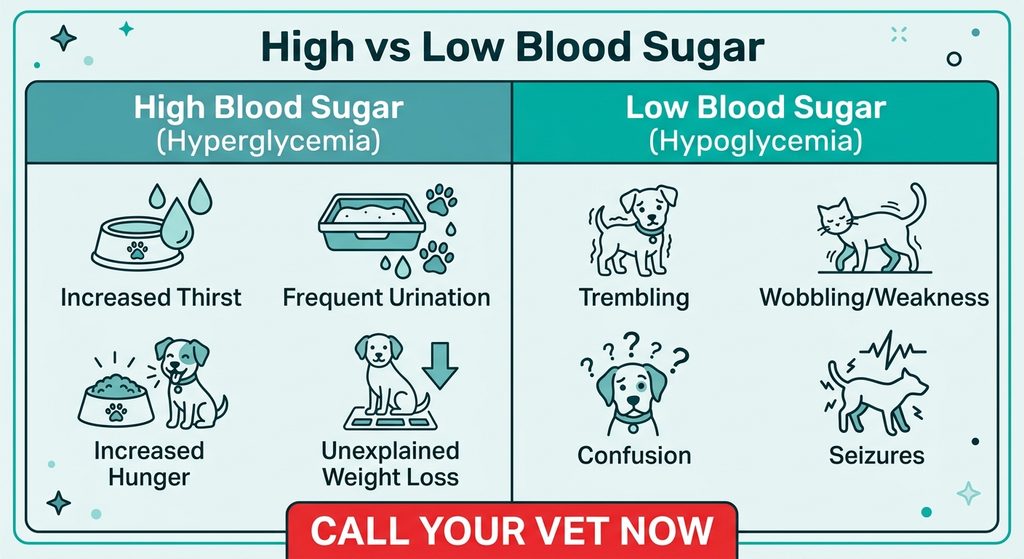
Hypoglycemia is the most serious risk of insulin treatment. Signs include weakness, wobbling, trembling, confusion and, in severe cases, seizures. If you see these signs, rub a small amount of corn syrup or honey on your pet’s gums and call your veterinarian immediately. Never give the next insulin dose if your pet has not eaten or is showing these signs.
Recheck Visits
In the first one to two months, expect rechecks every one to two weeks while the insulin dose is fine-tuned. Once your pet is stable, visits usually drop to every three to six months. Each routine pet health checkup for a diabetic pet should include a weight check, a review of your home notes, an eye exam for dogs, a dental check, and periodic urine testing to catch silent infections early.
Can Diabetes in Dogs and Cats Be Prevented?
Not every case is preventable, especially in dogs, but you can lower the risk and catch problems sooner:
- Keep your pet at a lean, healthy weight with measured meals and daily activity
- Ask about the risks before long-term steroid treatment
- Book a yearly exam, or twice-yearly exams for seniors, with routine pet blood work
- Pay attention to small changes in thirst, appetite and litter box habits
Weight, dental disease and urinary problems are closely tied to diabetes risk. Our article on common pet health concerns in East York explains how these issues overlap and how early veterinary diagnostics help prevent them from building on each other.
Frequently Asked Questions
-
What are the first signs of diabetes in dogs and cats?
The earliest signs are increased thirst, more frequent urination, a bigger appetite and weight loss despite eating normally. Dogs may also develop cloudy eyes, while cats may stop grooming or walk flat on their back legs. Because these changes start slowly, many owners notice them only in hindsight. If your pet is drinking or urinating more than usual for more than a few days, book an exam and ask for blood and urine testing.
-
Is diabetes in pets curable?
In dogs, diabetes is almost always lifelong, but it is very manageable with insulin, a consistent diet and regular monitoring. Many diabetic dogs live full, active lives. In cats, the outlook can be different. Some cats diagnosed early go into remission and no longer need insulin, especially with weight loss and a low-carbohydrate diet. Remission is not guaranteed, and cats in remission still need routine glucose checks for life.
-
How often will my diabetic pet need to see the vet?
Expect frequent visits at the start, often every one to two weeks for the first month or two while the insulin dose is adjusted. Once blood sugar is stable, most pets need rechecks every three to six months. Each visit typically includes a weight check, a review of your home log, and blood or urine testing. Call sooner if your pet stops eating, vomits, or shows weakness or trembling.
-
Can I manage my pet’s diabetes at home?
Yes, most of the day-to-day care happens at home. Owners give insulin injections, feed measured meals on a fixed schedule, and track water intake, appetite and energy. Many also learn to test blood glucose at home with a pet meter. Your veterinarian sets the treatment plan and adjusts doses based on your observations and test results, so keeping clear notes between visits is one of the most helpful things you can do.
-
What should I do if my diabetic pet won’t eat?
Do not give the usual insulin dose to a pet that has not eaten, since insulin without food can cause dangerously low blood sugar. Call your veterinarian for guidance on whether to give a reduced dose or skip it. A diabetic pet that refuses food, vomits or seems very tired may be developing ketoacidosis or another complication, so this situation should be treated as urgent and assessed the same day.
-
Final Thoughts on Diabetes in Pets
Diabetes in pets is serious, but far from hopeless. With early testing, the right insulin plan, a consistent diet and steady monitoring, most diabetic dogs and cats enjoy a good quality of life, and some cats return to life without injections. The most important step is noticing the changes and getting your pet tested. If your dog or cat is drinking more, urinating more, or losing weight, book an appointment with our team at 1551 O’Connor Dr, East York, ON M4B 2V7, call us at +1 416-755-8387, or email petcare@oconnorveterinaryclinic.ca.
A few extra sips from the water bowl can be the earliest clue, and catching it early gives your pet the best chance at a long, comfortable life.