
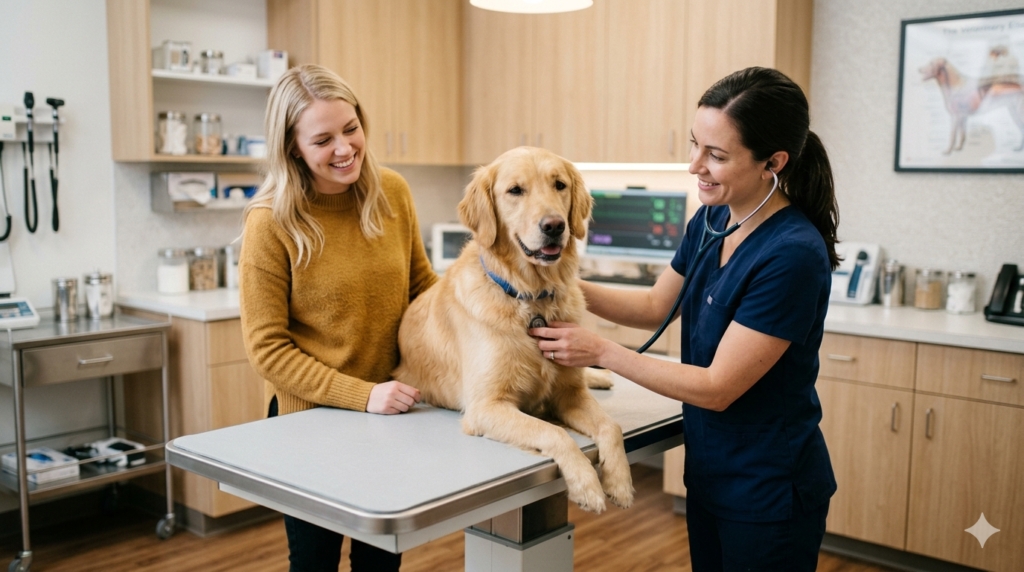

Most pet owners bring their dog or cat to the vet when something goes wrong — a limp, a lump, a night of vomiting that will not stop. But the visits that matter most are the ones where nothing seems wrong at all.
A pet wellness exam is the single most effective tool in veterinary medicine for catching disease early, avoiding preventable emergencies, and adding healthy years to your pet’s life. It is also the visit that gets skipped the most, because a pet that looks fine on the outside can quietly develop kidney disease, dental infections, heartworm, or metabolic disorders that do not show outward symptoms until significant damage has already occurred.
At O’Connor Veterinary Clinic in East York, preventive care makes up a substantial part of what we do — and the results speak for themselves. Pets that come in for regular veterinary wellness exams consistently avoid the late-stage diagnoses and expensive emergency visits that catch other pet owners off guard.
This guide breaks down what preventive veterinary care actually involves, why it matters at every life stage, and how Toronto pet owners can build a realistic prevention plan that works for their schedule and their pet’s specific needs.
What a Pet Wellness Exam Actually Covers
A wellness exam is more than a quick listen with a stethoscope. When done properly, it is a systematic, head-to-tail evaluation that takes into account your pet’s breed, age, weight, lifestyle, and medical history.
The veterinarian checks your pet’s eyes for signs of cataracts, glaucoma, or infection. They examine the ears for mites, yeast buildup, and early signs of chronic ear disease — something particularly common in breeds with floppy ears like Cocker Spaniels and Basset Hounds. The mouth gets a full inspection for tartar buildup, gum inflammation, fractured teeth, and oral masses.
From there, the exam moves to the heart and lungs via auscultation. A heart murmur detected during a routine annual pet exam can lead to early cardiac management that extends a pet’s life by years. The abdomen is palpated for organ enlargement, masses, pain responses, and fluid accumulation. Joints are flexed and extended to catch early arthritis, ligament laxity, or hip dysplasia.
The vet also evaluates your pet’s skin and coat quality, which often reflects internal health. Dull fur, excessive shedding, or flaky skin can point toward thyroid issues, allergies, or nutritional deficiencies.
Finally, your veterinarian will discuss body condition scoring, weight management, and any behavioural changes you have noticed at home — because subtle shifts in appetite, energy, water consumption, or litter box habits frequently serve as the earliest indicators of disease. Our wellness and preventive care team builds a detailed health profile at each visit, creating a longitudinal record that makes it far easier to spot trends over time.
Vaccinations and Parasite Prevention — The Non-Negotiables
If the wellness exam is the foundation, vaccinations and parasite prevention are the walls that keep threats out. Skipping either one is a gamble that carries real consequences.
Core vaccinations for dogs include rabies, distemper, parvovirus, and adenovirus. These are non-optional — rabies vaccination is legally required in Ontario, and parvovirus remains one of the deadliest infectious diseases in unvaccinated puppies. Dog vaccinations follow a schedule that starts between six and eight weeks of age, with boosters every three to four weeks until around sixteen weeks, and then ongoing boosters at intervals determined by your veterinarian.
Cat vaccinations follow a similar principle. The core feline vaccines cover rabies, feline viral rhinotracheitis, calicivirus, and panleukopenia. Indoor cats are not exempt — these pathogens can enter your home on shoes, clothing, and even through open windows. A proper pet vaccination schedule protects against diseases that are often fatal and almost always more expensive to treat than to prevent.
Beyond vaccinations, parasite prevention is a year-round commitment in Toronto’s climate. Flea and tick prevention for dogs is not a seasonal afterthought — ticks in Ontario remain active at temperatures as low as 4°C, and the Canadian Veterinary Medical Association has documented a steady expansion of tick habitats across southern Ontario over the past decade.
Heartworm prevention in East York and across the Greater Toronto Area is equally critical. Mosquitoes transmit heartworm larvae, and a single infected bite can lead to a disease that is expensive and difficult to treat but extremely simple to prevent with monthly medication. Your vet can recommend the best flea and tick prevention for dogs and cats based on species, lifestyle, and any existing sensitivities.
Intestinal parasites — roundworms, hookworms, tapeworms, and giardia — round out the prevention picture. Regular fecal testing during wellness exams catches infections that your pet can pick up from contaminated soil at any park or green space. Pet owners who frequent the pet-friendly places around O’Connor Drive know that active dogs face higher exposure to parasites and environmental pathogens, making consistent prevention even more relevant.
Life Stage Matters — Preventive Care for Puppies, Adults, and Seniors
A one-size-fits-all approach to preventive care does not work. What a twelve-week-old puppy needs is fundamentally different from what a ten-year-old Labrador requires, and tailoring the wellness plan to the life stage produces far better outcomes.
Puppies and kittens need the most intensive schedule during their first year. Puppy vaccinations start early and follow a multi-dose protocol because maternal antibodies from nursing gradually decline, leaving a window of vulnerability that only vaccines can close. Kitten wellness visits follow the same logic. Beyond vaccines, early-life visits cover deworming, nutritional counseling, microchipping, and discussions about spay and neuter timing. This is also the stage where behavioural baselines are established — the veterinarian documents resting heart rate, normal weight trajectory, and temperament, all of which become reference points for future visits.
Adult pets in the one-to-seven-year range (species-dependent) shift to annual wellness exams. The focus broadens to weight management, dental health, joint monitoring, and lifestyle-specific risks. A dog that hikes off-leash through Taylor Creek every weekend has different parasite exposure than an indoor apartment cat, and their prevention protocols should reflect that. Annual bloodwork during this stage is optional for healthy pets but strongly recommended — it builds a baseline for organ function values that becomes invaluable when the pet enters the senior years.
Senior pets (generally seven and older for dogs, eleven and older for cats) benefit most from biannual exams. The American Animal Hospital Association (AAHA) recommends twice-yearly veterinary wellness exams for senior animals because disease progression accelerates with age and six months can represent a significant shift in organ function. Senior pet care at this stage typically involves comprehensive bloodwork panels, thyroid screening, urinalysis, blood pressure monitoring, and more frequent dental evaluations. Early detection of chronic kidney disease, diabetes, hyperthyroidism (in cats), and Cushing’s disease (in dogs) depends almost entirely on catching subtle lab value changes before clinical symptoms appear.
Dental Health and Its Connection to Overall Wellness
Most pet owners underestimate how much dental disease affects overall health. By the age of three, the majority of dogs and cats show some degree of periodontal disease — and the consequences extend well beyond bad breath.
Bacteria from infected gums enter the bloodstream and seed in the heart valves, kidneys, and liver. A pet with untreated dental disease is a pet with a chronic systemic infection that quietly damages organs over months and years. This is why pet dental care is not cosmetic — it is a core component of preventive medicine.
A proper dental assessment during a pet wellness exam includes visual inspection of the teeth and gums, probing for pocket depth, and in many cases digital dental X-rays to evaluate bone loss and root health beneath the gum line. Veterinary dentistry encompasses professional cleanings under anaesthesia, extractions when teeth are beyond saving, and oral surgery for tumours or fractures.
At home, pet owners can support dental health with daily brushing (using pet-specific toothpaste — human toothpaste contains ingredients toxic to animals), dental chews approved by the Veterinary Oral Health Council, and water additives designed to reduce bacterial plating. None of these replace professional cleanings, but they extend the intervals between them. Senior dog dental care in Toronto deserves particular attention, as older dogs accumulate years of tartar and are more prone to tooth root abscesses that cause significant pain and often go unnoticed until the pet stops eating altogether.
The Role of Diagnostics in Catching Problems Early
Physical examination can only reveal so much. The conditions that kill pets most often — kidney disease, liver failure, diabetes, cancer — begin internally and remain invisible until they reach advanced stages. Diagnostics close that gap.
In-house diagnostics allow your veterinarian to run complete blood counts, biochemistry panels, urinalysis, and cytology during the same appointment. Results come back in minutes, not days, which means your pet’s treatment plan starts immediately rather than after a week of waiting and worrying. Pet blood work during a wellness exam can reveal elevated kidney values, liver enzyme abnormalities, blood sugar irregularities, and anaemia long before any external symptom manifests.
For deeper investigation, reference laboratory testing through partners like IDEXX and Antech provides advanced panels including thyroid function, cortisol levels, pancreatic markers, and pathology on biopsied tissue. These tests are particularly valuable for senior pets where multiple organ systems may be declining simultaneously.
Medical imaging services — digital radiographs and diagnostic ultrasound — add another layer of early detection. Abdominal ultrasound during a senior wellness exam can identify splenic masses, bladder stones, liver changes, and cardiac abnormalities that blood work alone would miss. The combination of physical examination, laboratory diagnostics, and imaging creates a three-dimensional health picture that no single tool can achieve on its own.
The Ontario Veterinary Medical Association consistently advocates for diagnostic screening as part of routine wellness care, noting that the cost of a preventive blood panel is a fraction of the cost of treating the diseases it is designed to detect early.
Why Toronto Pet Owners Are Prioritizing Preventive Care
There is a clear shift happening among pet owners in East York, Scarborough, and across the GTA. The generation of pet owners who only visited the vet for emergencies is being replaced by owners who treat their pets like family members deserving of proactive healthcare — the same way they would approach their own annual physical.
Part of this shift is economic. A pet wellness exam with routine blood work and a vaccination update represents a manageable annual investment. Treating advanced kidney disease, extracting a mouthful of rotten teeth under emergency anaesthesia, or managing a heartworm-positive dog costs significantly more — both financially and emotionally. Prevention is not just better medicine; it is better economics.
Part of it is also access. Clinics in East York with extended evening availability have removed one of the biggest barriers to preventive care: scheduling. Pet owners who work nine-to-five no longer have to take time off to bring their dog in for a wellness visit. A veterinary clinic near you that operates into the late evening makes it realistic to keep up with annual exams, booster vaccinations, and dental checks without disrupting your workweek.
And part of it is awareness. Toronto pet owners are better informed than ever about the connection between preventive care and pet longevity. They understand that the integrated approach to veterinary medicine — blending modern diagnostics with proactive wellness strategies — produces healthier, longer-lived pets.
If your pet has not had a wellness exam in the past twelve months, this is your prompt to schedule one. You can book an appointment online or call +1 416-755-8387 to get your pet’s preventive care back on track.
Frequently Asked Questions
-
How often does my pet need a wellness exam?
Adult dogs and cats in good health should have at least one pet wellness exam per year. Senior pets — typically dogs over seven and cats over eleven — benefit from biannual exams because age-related conditions like kidney disease, diabetes, and thyroid disorders develop faster and are easier to manage when detected early through routine blood work and physical assessment. Puppies and kittens require more frequent visits during their first year to complete vaccination protocols and monitor developmental milestones.
-
What vaccinations does my dog or cat need in Ontario?
Rabies vaccination is legally mandated in Ontario for both dogs and cats. Core dog vaccinations also include distemper, parvovirus, and adenovirus. Core cat vaccinations cover feline viral rhinotracheitis, calicivirus, and panleukopenia. Non-core vaccines — such as Bordetella, Leptospirosis, and feline leukaemia — are recommended based on your pet’s lifestyle, outdoor exposure, and boarding or grooming frequency. Your veterinarian will tailor a pet vaccination schedule specific to your animal’s risk profile.
-
Is flea and tick prevention really necessary year-round in Toronto?
Yes. While flea and tick activity peaks during warmer months, ticks in Ontario remain active at temperatures above 4°C, which means risk extends well into autumn and can resume before spring fully arrives. Heartworm prevention follows a similar logic — mosquitoes may appear earlier or later depending on weather patterns. Year-round parasite prevention eliminates gaps that leave your pet vulnerable, and veterinarian-recommended products are consistently safer and more effective than over-the-counter alternatives.
-
Why does my vet recommend blood work if my pet seems healthy?
Blood work detects internal changes that physical examination cannot reveal. Elevated kidney enzymes, liver value abnormalities, blood sugar shifts, and early anaemia all develop silently before external symptoms like weight loss, vomiting, or lethargy appear. A baseline blood panel for a healthy adult pet creates a reference point that makes future changes easier to identify. For senior pets, regular blood work is considered standard preventive care by veterinary medical associations across North America.
-
At what age should I spay or neuter my pet?
The recommended timing for spay and neuter procedures depends on species, breed, and size. Small to medium dogs are typically spayed or neutered around six months of age. Large and giant breed dogs may benefit from waiting until twelve to eighteen months to allow full musculoskeletal development, based on current veterinary orthopaedic research. Cats are generally spayed or neutered between four and six months. Your veterinarian will recommend the optimal timing based on your pet’s individual health profile and breed-specific considerations.
-
What is included in a senior pet wellness exam?
A senior pet care visit goes beyond the standard annual exam. It typically includes a comprehensive physical examination, complete blood count, biochemistry panel, thyroid screening, urinalysis, blood pressure measurement, and often abdominal imaging via ultrasound or radiographs. The goal is to screen for age-related conditions — chronic kidney disease, diabetes, heart disease, liver dysfunction, and cancer — at the earliest detectable stage, when treatment options are broadest and outcomes are best.